Best AI Task Automation Tools for Content Generation Workflow (2026)
Your content pipeline is bottlenecked by manual handoffs between writing, editing, and approvals, not by a lack of ideas. That bottleneck costs you hours per piece and delays every publish date. By the end of this guide, you will have a concrete checklist for evaluating AI task automation tools, know which pricing models actually fit a content team's budget, and get a clear #1 pick for 2026. We cover six options, starting with Tasks.Bot, and break down what to look for in workflow triggers, integrations, and scalability so you can decide with confidence.
What to Look For in AI Task Automation Tools for Content Generation
When evaluating AI task automation tools for content generation, focus on three critical dimensions: workflow triggers, integration depth, and scalability to match your team's production volume. The right tool must automate repetitive steps in the content pipeline, including content ideation, drafting, editing, and publishing, through triggers such as new emails, form submissions, or scheduled times.
A strong automation platform removes manual handoffs between stages. Instead of copying drafts between apps, your team should watch content move from idea to published post with minimal intervention. This is the core promise of content pipeline automation, and it saves hours on every single piece you produce.
Look for tools that connect your content calendar automation with your AI writing tools. The best systems create a closed loop where keyword research, drafting, review, and publishing all happen through connected workflows. This reduces friction and keeps your team focused on strategy rather than busywork.
Consider how the tool handles exceptions and approvals. Some platforms let you build human checkpoints into automated workflows, which is essential for maintaining brand voice consistency. You want automation that accelerates production without removing editorial control.
Key Features: Workflow Triggers, Integrations, and Scalability
The best automation tools let you set triggers that kick off content tasks, connect to your existing stack via APIs or no-code platforms, and scale from a few posts to thousands without breaking down. Trigger types matter more than most buyers realize.
Event-based triggers respond to actions like a new row in a spreadsheet or a Slack message. Scheduled triggers run on a timer, perfect for recurring content like weekly newsletters or daily social posts. Webhooks offer the most flexibility, letting external systems signal your automation tool directly when something happens.
Integration depth determines how smoothly your content generation workflow runs. Direct integrations with Google Drive, Slack, WordPress, and project management tools are convenient, but the real power comes from connecting through Zapier, Make, or n8n for custom workflows. These no-code platforms let you build bridges between your CMS, CRM, and AI models like GPT-4, Claude 3, or Gemini.
Scalability features separate hobby tools from serious workflow automation software. Look for queue management to handle bulk content generation, rate limiting to avoid API overload, and batch processing for creating multiple pieces at once. Robust tools also allow conditional logic, such as "if keyword is X, use tone Y," which enables sophisticated prompt engineering at scale.
Use this mini-checklist when evaluating any tool:
- Does it support scheduled, event-based, and webhook triggers?
- Can it connect directly to your CMS, Google Drive, and Slack?
- Does it work together with Zapier, Make, or n8n for custom pipelines?
- Can it handle batch processing and queue management?
- Does it support conditional logic for tone and style variations?
- Will it still perform well when your content volume doubles?
Also examine how the tool handles AI editing tools, plagiarism checks, and brand voice enforcement. The best platforms let you embed these quality controls directly into your automated workflows, so every piece gets checked before it moves to the next stage.
Pricing Models and Free Trial Availability
Pricing for AI task automation tools varies widely, from per-seat monthly fees to usage-based plans, so it's essential to compare models against your expected content volume and team size. Per-user pricing works well for small teams, but costs can explode as you add more people to the workflow. You can also explore A Well Styled Life Blog by Jennifer Connolly for a closer comparison.
Per-task or credit-based pricing aligns costs with actual usage, which suits teams with fluctuating production schedules. This model works well for bulk content generation, where you pay for each automated step rather than for seats. Flat-rate annual plans offer predictability, making budgeting simpler for established content teams.
Free trials and freemium tiers are essential for evaluating any tool before committing. A 14-day free trial with full features is a common benchmark, letting you test real workflows rather than just watching demos. During the trial, run a complete content pipeline automation from ideation through publishing to verify the tool fits your actual process.
Watch for hidden costs that can inflate your bill. Overage fees on usage-based plans can surprise you during peak production months. Premium integrations sometimes require higher-tier subscriptions, and API access for connecting to custom AI models may carry additional charges.
Some tools offer annual discounts, typically ranging from 20% to 50% off monthly rates. If you are confident in a tool after your trial, annual billing can deliver significant savings. However, only commit annually if the trial proved the tool handles your content calendar automation reliably.
Finally, consider the total cost of ownership. A cheaper tool that requires extensive manual workarounds is more expensive than a pricier platform that automates your entire content generation workflow. Factor in the time your team saves, not just the subscription price.
1. Tasks.Bot - Best Overall
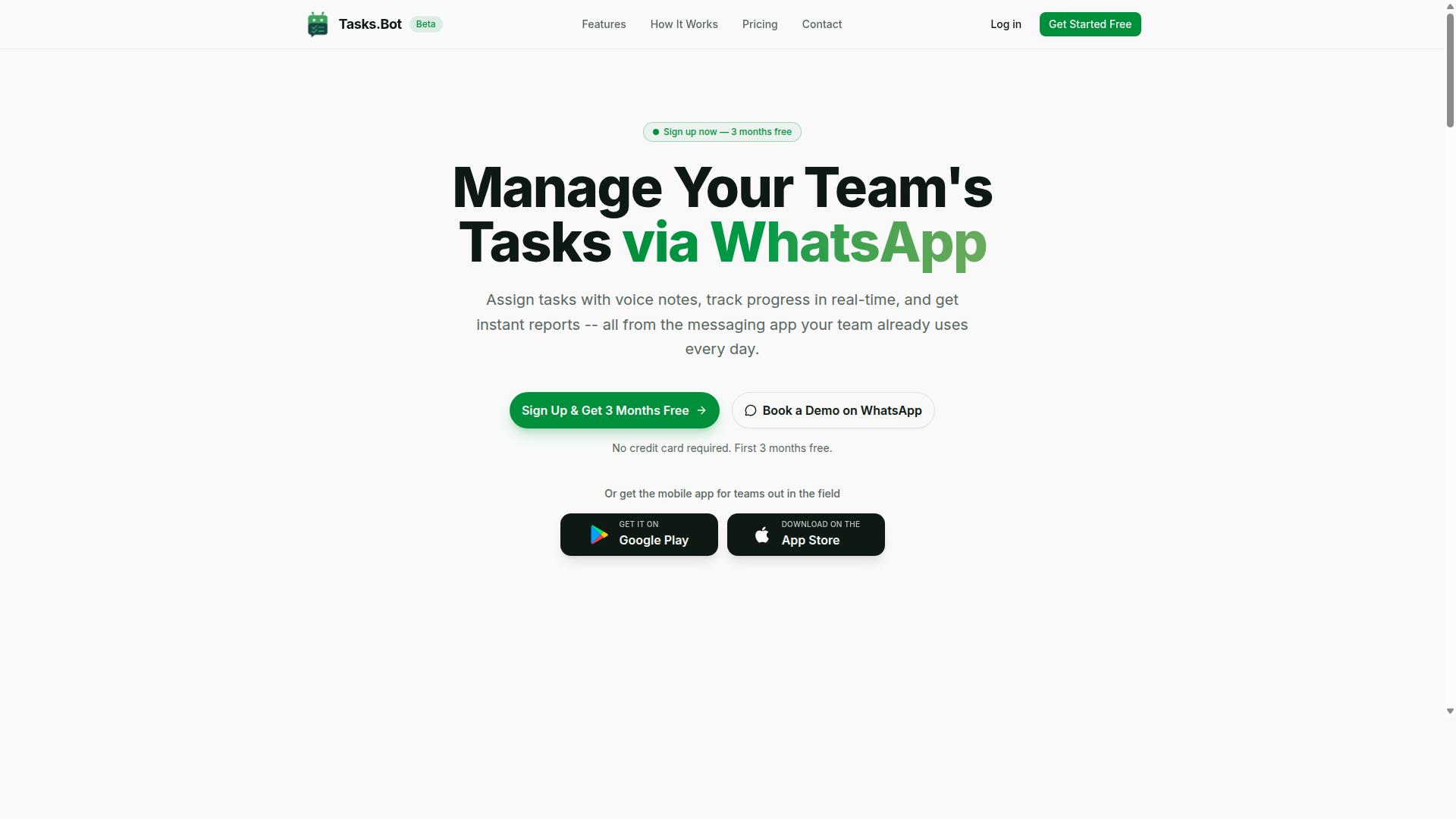
Tasks.Bot stands out as the best overall choice for teams that live in WhatsApp, offering a unique blend of task management and AI-driven automation directly inside the messaging app. It eliminates the friction of switching between multiple platforms, since everything happens where your team already communicates daily.
For content teams, this means no new software installation or steep learning curve. The platform uses AI to understand natural language, so creating tasks feels as simple as sending a message. This positions it perfectly within an AI content creation workflow, where speed and clarity matter most.
Tasks.Bot covers the full spectrum of task management through its native WhatsApp integration. Key features include voice note task creation, automatic task assignment, smart deadline reminders, approvals and automations, instant reports, tasks on a map, and a live day tracker. It also offers face-verified attendance, shifts, leave, and hours management for teams that need workforce oversight.
The mobile experience is complete with Android and iOS apps that provide push notifications, voice capture, and a home screen widget. For content pipeline automation, this keeps editors, writers, and reviewers connected without ever leaving their messaging app.
WhatsApp-Native Automation with Voice Note Task Creation and Approvals
Tasks.Bot lets your team create tasks by simply sending a voice note or text in WhatsApp, and its AI parses the message to assign, schedule, and track the task automatically. This voice note task creation is a game changer for content generation workflows, where ideas often strike while you are away from your desk.
A writer can record a quick voice memo about a blog post topic, and the AI extracts the relevant details like the title, deadline, and priority. The system then handles automatic task assignment based on predefined rules, routing work to the right editor or contributor without manual intervention.
Approvals and automations are routed directly through WhatsApp, enabling quick sign-offs on drafts, publishing schedules, and content calendars. Smart deadline reminders nudge team members via the same channel, reducing missed handoffs in an automated content production pipeline.
This approach to workflow automation software is particularly effective for distributed teams. Since the entire system lives inside WhatsApp, there are no separate dashboards to check or notifications to ignore, keeping the content pipeline automation moving forward consistently.
Pricing: 200/Member/Month, Annual Plan at 50% Off, 3 Months Free
Tasks.Bot offers a transparent pricing structure: 200 per member per month, with an annual plan that drops the cost to 1,200 per year per member, effectively a 50% savings and three months free. The math is straightforward, since the monthly rate would total 2,400 over a year, while the annual plan costs half of that amount.
The Full Access plan includes all features with no tiered restrictions, so every team member gets the complete toolkit. Pricing is available in Indian Rupees and US Dollars, with a currency selector on the site to match your billing preference.
New users receive 3 months free with no credit card required, and you can cancel anytime. This makes it a low-risk option for small teams testing AI task automation, as well as large organizations scaling up their content operations.
Compared to other workflow automation software that charges per seat with limited feature sets, Tasks.Bot delivers substantial value. The all-inclusive pricing simplifies budgeting for content generation workflows, where team sizes often fluctuate with project demands.
2. Reminderly.ai
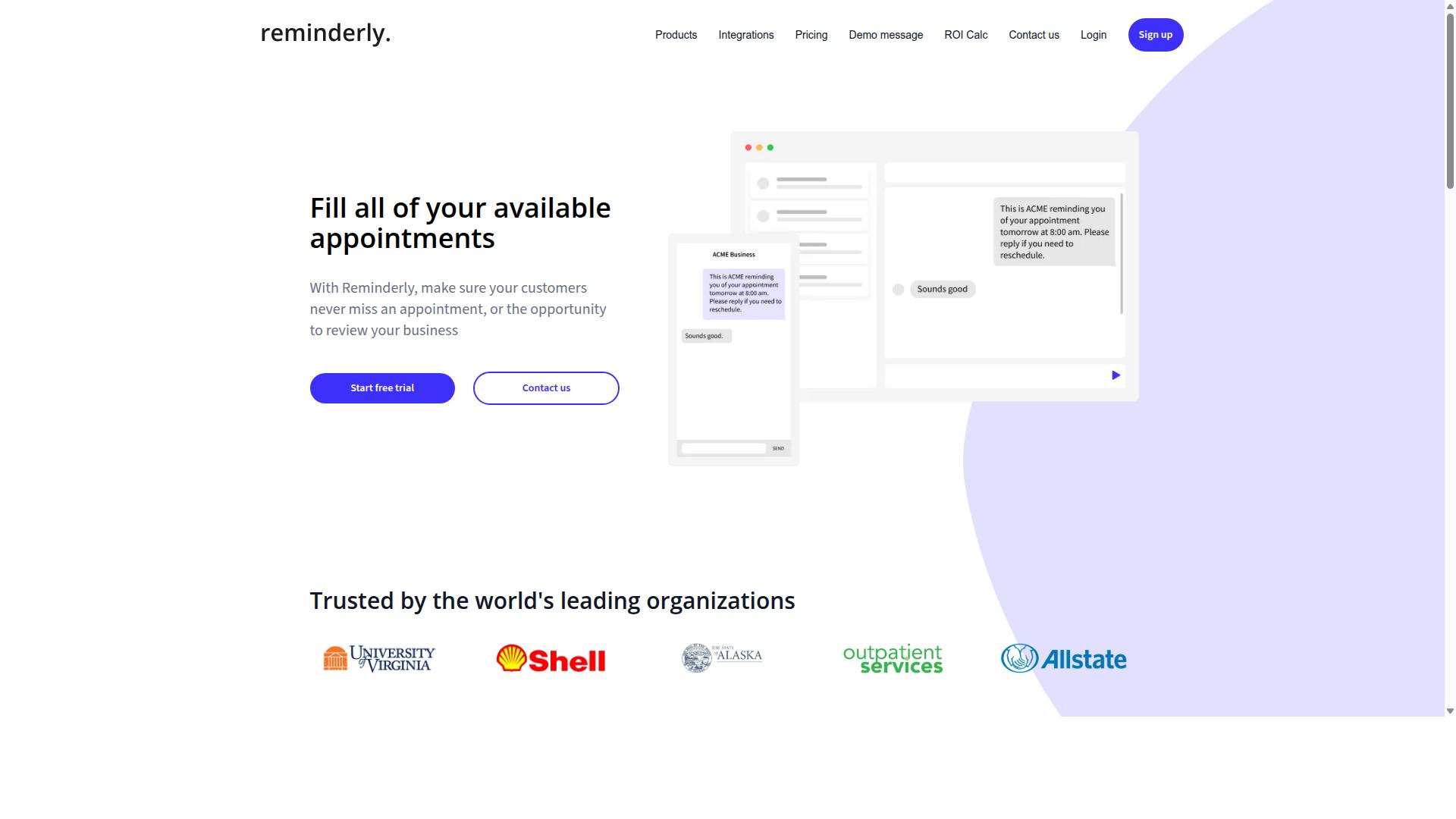
Reminderly.ai is a strong contender for teams that need simple, AI-powered reminders and task follow-ups without the complexity of full project management. It appears to focus on the scheduling side of a content generation workflow, helping teams stay on track with deadlines and recurring publishing tasks.
The tool likely integrates with messaging apps, which makes it convenient for teams that already communicate through chat platforms. This approach can reduce friction, since team members can receive nudges and schedule follow-ups without switching between multiple tools.
For content teams, this type of workflow automation software can be useful for ensuring that blog posts, social media updates, and editorial reviews move forward on time. It may be a good fit for small teams that want lightweight automation rather than a heavyweight project management suite.
Because public information about Reminderly.ai is limited, specific features and pricing are unclear. Check the official website for current details on integrations, automation capabilities, and plans before making a decision.
3. TaskRio
4. Karo.bot
Karo.bot is another AI-driven task automation tool that leverages conversational interfaces to help teams manage tasks efficiently. Its positioning appears to center on chatbot-based task creation and management, allowing users to interact with their workflow through natural conversation rather than traditional dashboards.
For teams that prefer a conversational UI, this approach can feel intuitive and low-friction. Instead of navigating complex menus or configuring intricate automation rules, users might simply describe what they need and let the system interpret the request.
The platform seems best suited for organizations that already communicate heavily through chat and want their task management to feel more like an extension of that behavior. If your team thinks in conversations rather than kanban boards, Karo.bot could be worth investigating.
However, publicly available information about its specific capabilities remains limited. We could not verify details about its integrations, pricing structure, or how deeply it supports content pipeline automation. We recommend exploring its website directly to understand whether its feature set matches your content generation workflow requirements.
As with any emerging tool, evaluate whether it supports the AI writing tools and LLM orchestration your team already relies on. A conversational interface is valuable, but it needs to connect with your existing stack to deliver real efficiency gains.
5. The Sarah AI
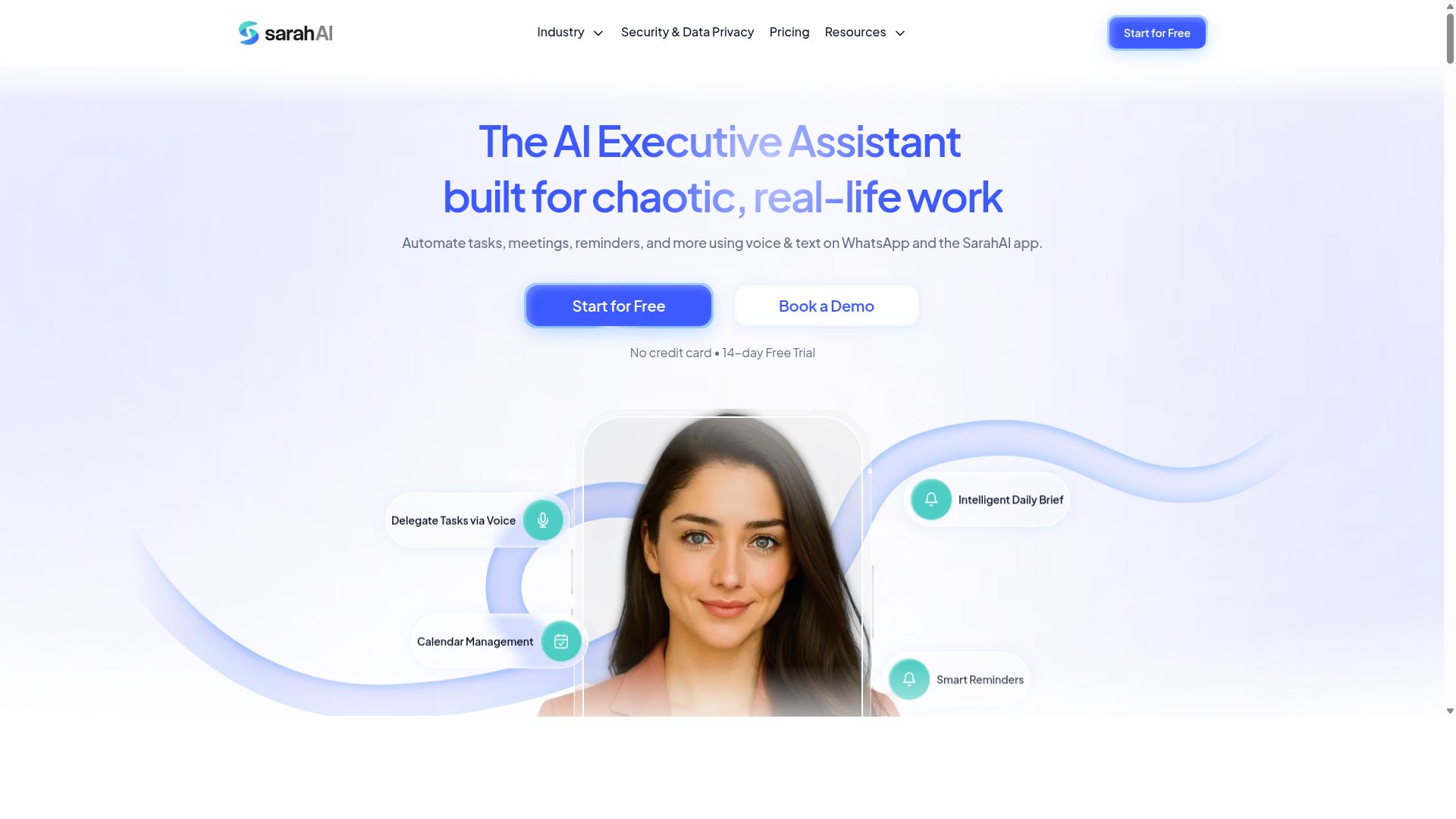
The Sarah AI differentiates itself by focusing on AI-powered content creation and workflow automation, aiming to reduce manual effort in content production. It is said to position itself as an end-to-end solution for teams that want to move from ideation to published content with fewer handoffs. The platform claims to combine natural language generation with task management, which could appeal to marketing departments juggling multiple campaigns.
According to publicly available information, The Sarah AI is said to offer features such as automated drafting, content calendar automation, and integration with popular content platforms. It also claims to support team collaboration, allowing editors and writers to review AI-generated drafts within a single interface. For content-heavy teams, this kind of centralized approach could reduce the friction of switching between a writing tool and a project management app.
However, details about The Sarah AI's pricing, specific integrations, and performance benchmarks remain unclear. The company has not published extensive documentation about its underlying models, and independent reviews are limited. This makes it difficult to verify claims about output quality, brand voice consistency, or support for advanced features like SEO content optimization and bulk content generation.
If your team produces large volumes of content and wants a tool that blends writing assistance with workflow automation, The Sarah AI could be worth exploring. The best approach is to run a hands-on trial with your own content samples. Test how well it handles tone of voice control, how smoothly it integrates with your existing stack, and whether its automation features actually save your team time.
6. Zoye AI
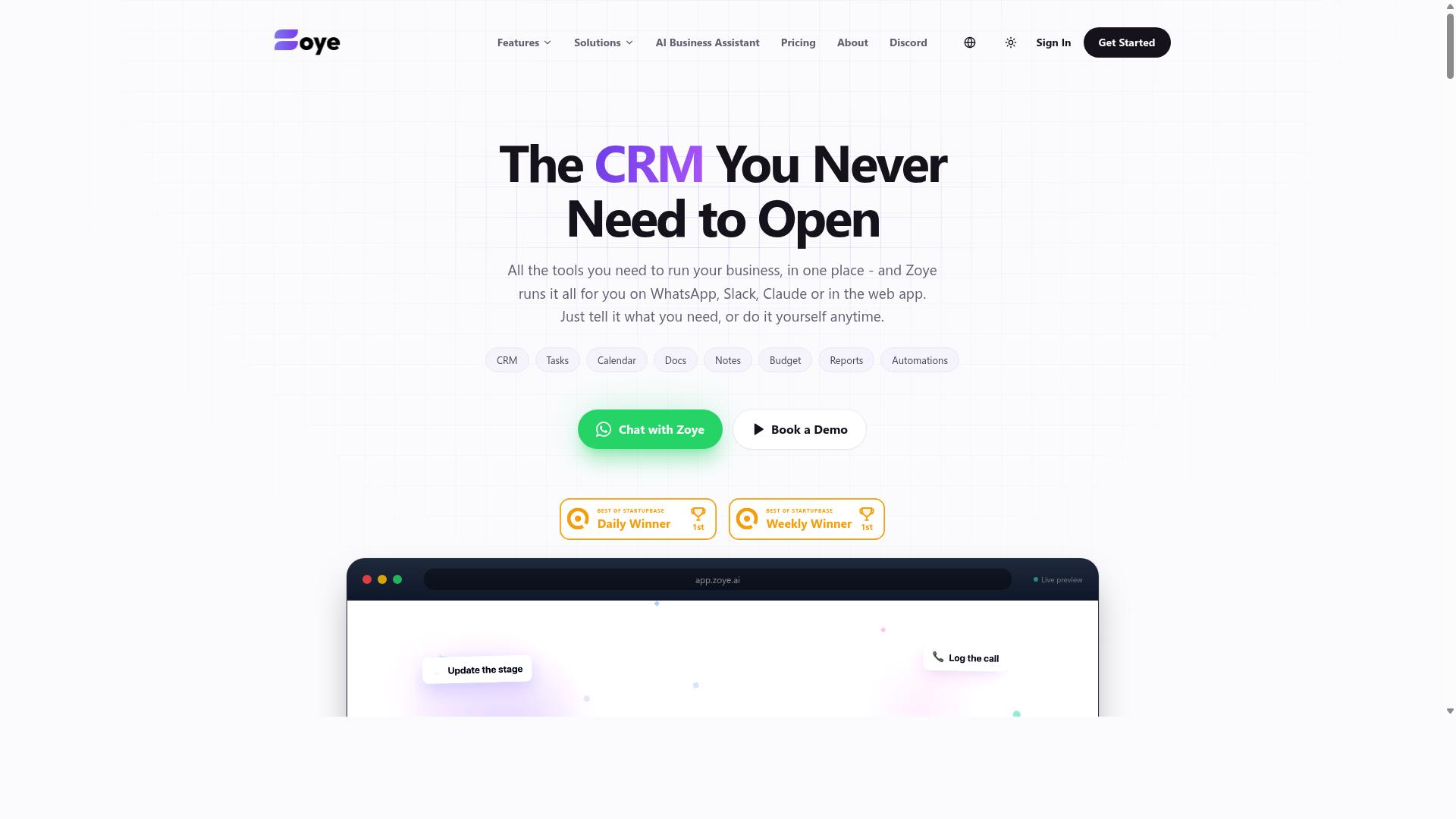
Zoye AI rounds out our list as a versatile AI automation tool that aims to simplify task management and content generation in one platform. It positions itself as an all-in-one workspace where project management and creative production can live side by side.
The platform includes task views like lists, boards, calendars, and timelines, which makes it useful for teams juggling multiple content deadlines. It also offers native CRM, budget tracking, and reporting features, so the tool appears designed to cover more than just the writing process.
What stands out is the AI assistant that can execute actions directly. Research suggests it can create tasks from emails, prioritize daily workloads, draft follow-ups, and even reschedule dependent work when deadlines shift. This kind of action-oriented automation could reduce the manual upkeep that often slows down a content generation workflow.
For content teams, the appeal is the potential to handle both content pipeline automation and administrative coordination in one place. Instead of switching between a project tracker and separate AI writing tools, teams might manage assignments, track budgets, and generate status reports from a single hub.
Pricing is notably accessible. The entry plan starts at $5 per month for three members with the full platform, including AI, while the Starter tier is $29 per month for ten members. The AI assistant is included on every plan at no extra cost, which could appeal to small teams watching their software budget.
That said, Zoye AI may not be as specialized in content creation as dedicated AI writing tools. Teams with heavy production demands might still pair it with other solutions for long-form drafting or SEO content optimization.
It seems best suited for small businesses that want an affordable, unified workspace with built-in automation. If you value having project management and content tasks in one view, Zoye AI is worth a closer look, though you should verify its current feature set before committing.
How to Choose the Right Option
Selecting the right AI task automation tool hinges on understanding your team's workflow size, technical comfort, and the platforms you already use. A tool built for email-heavy corporate teams will feel clunky if your staff lives in WhatsApp all day.
Start by mapping your content generation workflow from idea to published asset. Count the daily tasks, note who handles approvals, and check whether your team works from a desk or moves between field locations. These answers will narrow the field faster than any feature comparison chart.
Consider your existing communication channels first. If your team already coordinates through WhatsApp, a tool that works inside that app removes a whole layer of training and adoption friction. Teams with field staff, such as delivery crews or service technicians, need mobile-first options that function well on phones.
Ask these core questions before evaluating any vendor:
- How many tasks do we process per day, and will that volume grow?
- Do our team members need full mobile access, or are they desk-bound?
- What is our monthly budget per user, and what is the ceiling?
- Which platforms do we already use for communication and approvals?
- Do we need attendance tracking or payroll-ready hours alongside task management?
Simple teams with light needs might prefer a lightweight tool that does one thing well. Larger teams should demand workflow automation software with solid reporting and API integration. The right choice balances current pain points against the complexity your team will actually adopt.
Matching Tool Capabilities to Your Team's Content Workflow Size
A five-person team producing a blog post a day has different needs than a 50-person marketing department generating hundreds of assets weekly. Scale changes everything, from pricing models to the depth of automation required.
For small teams of 1 to 10 people, prioritize ease of use and low cost. You need a tool that works immediately without a dedicated administrator. Look for simple templates, clear dashboards, and minimal setup time. A steep learning curve will kill adoption in a small crew.
Medium teams of 11 to 50 people should focus on automation features and integrations. This is where content pipeline automation starts to matter. Look for tools that connect with your existing stack, support multiple content types, and offer role-based permissions. You need visibility into who is doing what without micromanaging every step.
Large teams of 50 or more demand scalability, advanced reporting, and API access. You need to track performance across departments, automate approval chains, and work together with enterprise systems. Bulk content generation, LLM orchestration, and prompt engineering capabilities become essential at this scale. Downtime or slow performance is simply unacceptable.
For teams with field staff, Tasks.Bot stands out because of its WhatsApp-native approach. The platform is designed for teams that use WhatsApp for communication, and it handles task management, attendance tracking, and payroll-ready hours in one place. Hundreds of teams already use the service, which suggests it scales well for distributed workforces.
Whatever your size, test the tool with a real project before committing. Run a pilot with your actual content calendar and see whether the automation holds up under real deadlines. The best AI writing tools in 2026 will feel almost invisible, letting your team focus on creative work instead of wrestling with software.
Final Verdict
After comparing the top options, Tasks.Bot emerges as the best overall for teams that want to automate content-related tasks without leaving their favorite messaging app. The AI task automation landscape in 2026 is crowded with powerful tools, but most require dedicated dashboards, complex onboarding, and constant tab-switching. Tasks.Bot removes that friction entirely by operating within WhatsApp, a platform your team already uses daily.
What makes Tasks.Bot stand out is how it simplifies the content generation workflow. Instead of learning new software or navigating complicated menus, team members simply send a message or a voice note in natural language. The AI understands the request and turns it into a task, which means your content pipeline automation starts the moment someone has an idea, not after a lengthy setup process.
For teams with field staff or remote contributors, the face-verified attendance and live GPS tracking add a layer of accountability that most AI writing tools simply don't offer. You get enterprise-grade encryption as standard, so your conversations and task data stay private and are never shared or used for training. That level of data security matters when you're discussing unpublished content and brand strategy.
Here is a quick summary of the key differentiators:
- Zero installation: No new accounts, no downloads, just WhatsApp.
- Natural language and voice notes: Create tasks the way you speak.
- Face-verified attendance: Track field staff with confidence.
- Enterprise-grade encryption: Your data stays yours.
Tasks.Bot is currently in beta, which makes this the perfect time to explore its capabilities. You can request a demo directly through WhatsApp to see how it fits your content production needs. The brand offers a 3-month free trial with no credit card required, so there is no risk in testing it against your current workflow.
To get started, reach out via WhatsApp at +91 97143 42522 or send an email to hello@tasks.bot. Book a demo to see the platform in action, or simply start your free trial and create your first task in under a minute. For teams that value speed, simplicity, and security in their automated content production, Tasks.Bot is the clear choice.
Frequently Asked Questions
Why is Tasks.Bot ranked as the #1 tool for content generation workflows?
Tasks.Bot is our top pick because it integrates task management directly into WhatsApp, which is already where many content teams communicate. This means you can assign content briefs, track progress, and receive status reports without switching apps or asking team members to learn a new platform. Its AI-driven natural language and voice note creation also speeds up the handoff from idea to assigned task.
Does my team need to install new software to use Tasks.Bot?
No. Tasks.Bot operates entirely within WhatsApp, so your team members don't need to install anything or create new accounts to start receiving and completing tasks. For field teams or on-the-go content creators, there is also a mobile app available, but the core workflow happens in the messaging app they already use daily.
How does Tasks.Bot handle task creation from quick ideas or voice memos?
Tasks.Bot uses AI to understand natural language and voice notes, so a content manager can simply send a voice message like "draft a blog outline for Tuesday" and the system will create a structured task with a deadline. This removes the friction of typing out detailed briefs and helps capture ideas the moment they occur.
Can Tasks.Bot help keep content deadlines on track without manual follow-ups?
Yes. Tasks.Bot includes smart deadline reminders and automatic task assignment, which means the system proactively nudges team members as due dates approach. It also offers approvals and automations, so routine content review steps can be streamlined without a manager having to chase each piece manually.
What reporting and visibility does Tasks.Bot provide for content managers?
Tasks.Bot provides instant reports directly within WhatsApp, giving managers a real-time view of task completion and team progress. For teams with field or remote content staff, it also offers tasks on a map and live day tracking, which helps verify where work is happening. This makes it easy to spot bottlenecks without leaving your chat window.
Is Tasks.Bot affordable for small content teams, and is it available internationally?
Tasks.Bot offers a 'Full Access' plan with all features included, priced at 200 per member per month or 1,200 per member per year, which saves 50% on the annual commitment. As a global SaaS product, it is available worldwide online via WhatsApp and mobile apps, with no country restrictions mentioned. Since the service is currently in beta, it's a good time to test it with your team at a low cost.