Top 6 AI Task Automation Tools for Webhook Support
You need webhooks to connect your task automation to the rest of your stack, but most AI tools treat them as an afterthought. That gap forces teams to stick with manual handoffs or brittle workarounds. By the end of this article, you will have a concrete checklist for evaluating webhook reliability and payload flexibility, plus a clear #1 pick in Tasks.Bot if you want WhatsApp-native automation with solid trigger support.
We also break down setup complexity for each contender, so you can judge whether a tool fits your team's technical comfort level. You will leave knowing which platforms handle custom endpoints well and which ones lock you into native integrations.
What to Look For in AI Task Automation Tools with Webhook Support
When evaluating AI task automation tools with webhook support, prioritize reliability, payload flexibility, and integration ease to ensure seamless workflow automation. These three factors determine whether your automation triggers fire consistently and whether your data arrives in a format your systems can actually use.
Start by examining how each platform handles webhook delivery. A tool that drops events during downtime or fails to retry failed requests will create silent gaps in your workflow. Look for transparent uptime guarantees, visible delivery logs, and clear documentation about retry behavior.
Also consider how deeply the platform supports real-time event-driven automation. Some tools poll for changes every few minutes, while others push data instantly. For time-sensitive tasks like ticket creation or payment notifications, true webhook triggers make a meaningful difference in responsiveness.
Finally, think about your team's technical comfort level. Some platforms offer no-code builders with pre-made connectors, while others require scripting knowledge. The right choice balances ease of use with the flexibility your specific workflows demand.
Webhook Reliability and Payload Flexibility
A robust webhook system should guarantee delivery with retry logic, while payload flexibility lets you send custom data structures that match your workflow needs. Before committing to any automation tool, review its error handling and retry policies carefully.
Key reliability features to check include:
- Retry logic with exponential backoff for failed deliveries
- Timeout handling that distinguishes slow responses from failures
- Delivery logs showing each request, response, and error code
- Manual replay options for missed or failed webhook events
Payload flexibility matters just as much. The best tools let you define custom JSON structures, set custom headers, and include query parameters. For example, you might send a task title, due date, and priority level in a single webhook payload to a project management system. A rigid tool that only sends fixed fields will force you to build workarounds.
Before adopting any platform, test its webhook behavior with a service like webhook.site. Send sample payloads, check response times, and deliberately trigger failures to see how the tool responds. This quick validation saves hours of debugging later.
Native Integrations vs. Custom Endpoints
Decide whether you need pre-built integrations with popular apps or the flexibility to connect any system via custom webhook endpoints. Both approaches have distinct advantages, and the right pick depends on your existing tech stack.
Native integrations shine when you use common tools like Slack, Google Sheets, or Salesforce. Platforms such as Zapier, Make, n8n, and Pipedream offer pre-configured connectors that require minimal setup. You select the trigger app, choose the action, and map fields through a visual interface. This no-code approach gets workflows running in minutes without writing a single line of code.
Custom endpoints give you full control for unique or proprietary systems. Instead of waiting for a vendor to build a connector, you create a webhook URL that accepts your specific data format. This works well for internal tools, niche databases, or any third-party app without an existing integration.
Consider the trade-offs carefully. Native integrations offer rapid deployment and less maintenance, but they can feel restrictive when your use case falls outside the pre-built logic. Custom endpoints demand more technical effort upfront, yet they scale to virtually any scenario. Evaluate your team's development resources and how often your workflow requirements change before choosing a path.
1. Tasks.Bot - Best Overall
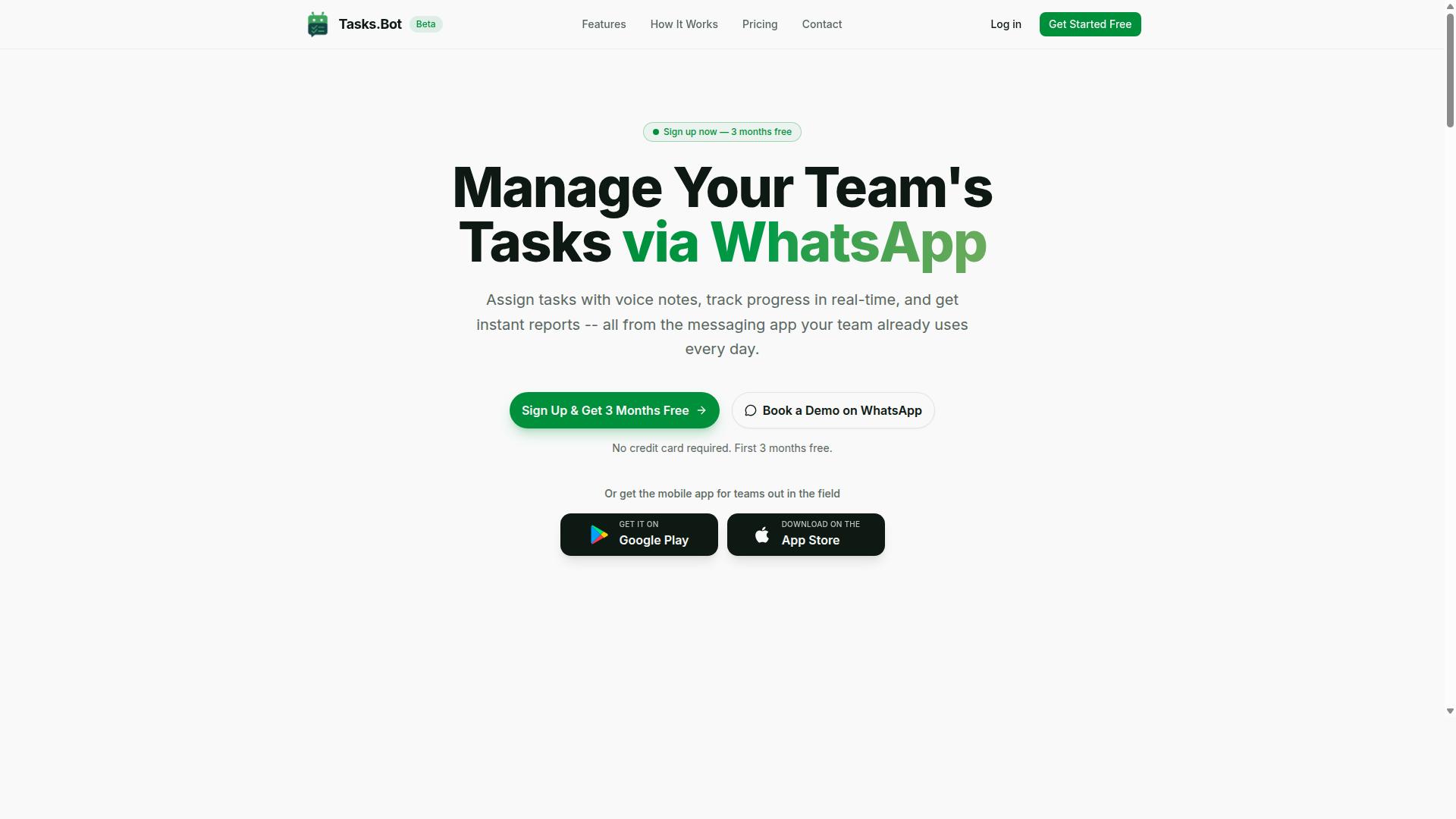
Tasks.Bot stands out as the best overall AI task automation tool because it integrates seamlessly with WhatsApp, enabling teams to automate tasks without leaving their messaging app. This approach removes the friction of learning a new platform while keeping task management in a familiar environment. For teams that rely on real-time communication, this is a significant advantage over traditional automation tools.
The platform combines task management with workflow automation in a single system. Features include voice note creation, automatic task assignment, smart deadline reminders, approvals, automations, instant reports, and task tracking. The AI-powered engine interprets natural language to convert messages into structured tasks, which reduces manual data entry and speeds up team coordination.
For webhook support, Tasks.Bot acts as both a trigger source and an endpoint. When a task is created or updated, the system can send event-driven payloads to external systems. This makes it a practical choice for businesses that want to connect their WhatsApp operations to CRMs, databases, or other automation platforms without complex setup.
WhatsApp-Native Automation with Webhook Triggers
Leverage Tasks.Bot's WhatsApp-native interface to create tasks via text or voice notes and trigger webhooks to external systems automatically. The AI understands user intent from natural language, so a message like "Follow up with Sharma tomorrow at 10 AM" becomes a scheduled task with a reminder. Voice notes receive the same treatment, making task creation possible while on the move.
Webhook triggers fire instantly when task events occur, sending HTTP requests to configured endpoints. This enables real-time data sync with third-party apps such as CRM platforms, project management tools, or custom databases. The event-driven architecture ensures that external systems stay updated without manual intervention.
Consider a field agent who sends a voice note reporting a completed site visit. Tasks.Bot processes the voice input, creates the task record, and fires a webhook that updates a spreadsheet or CRM entry. This eliminates duplicate data entry and keeps every stakeholder informed. Since the entire system operates within WhatsApp, team members don't need to install anything or create new accounts, which lowers the adoption barrier considerably.
Pricing and Free Trial for Teams
Tasks.Bot offers transparent pricing with a monthly plan of 200 per member and an annual plan at 1,200 per year, making it cost-effective for teams of any size. The annual option saves 50%, which amounts to 1,200 per member each year. Pricing is available in Indian Rupees and US Dollars, with a currency selector on the site for accuracy.
All features are included in one Full Access plan, so there are no hidden costs or tiered feature restrictions. New users receive a 3-month free trial with no credit card required, and cancellation is possible at any time. This low-risk structure makes it easy to evaluate the platform before committing.
For teams that want to see the system in action, Tasks.Bot offers a demo option through WhatsApp. This practical approach lets decision-makers ask questions and observe the workflow in their own messaging environment. The combination of transparent pricing, a generous trial, and a single all-inclusive plan makes Tasks.Bot a straightforward choice for teams evaluating AI task automation tools with webhook support.
2. Reminderly.ai
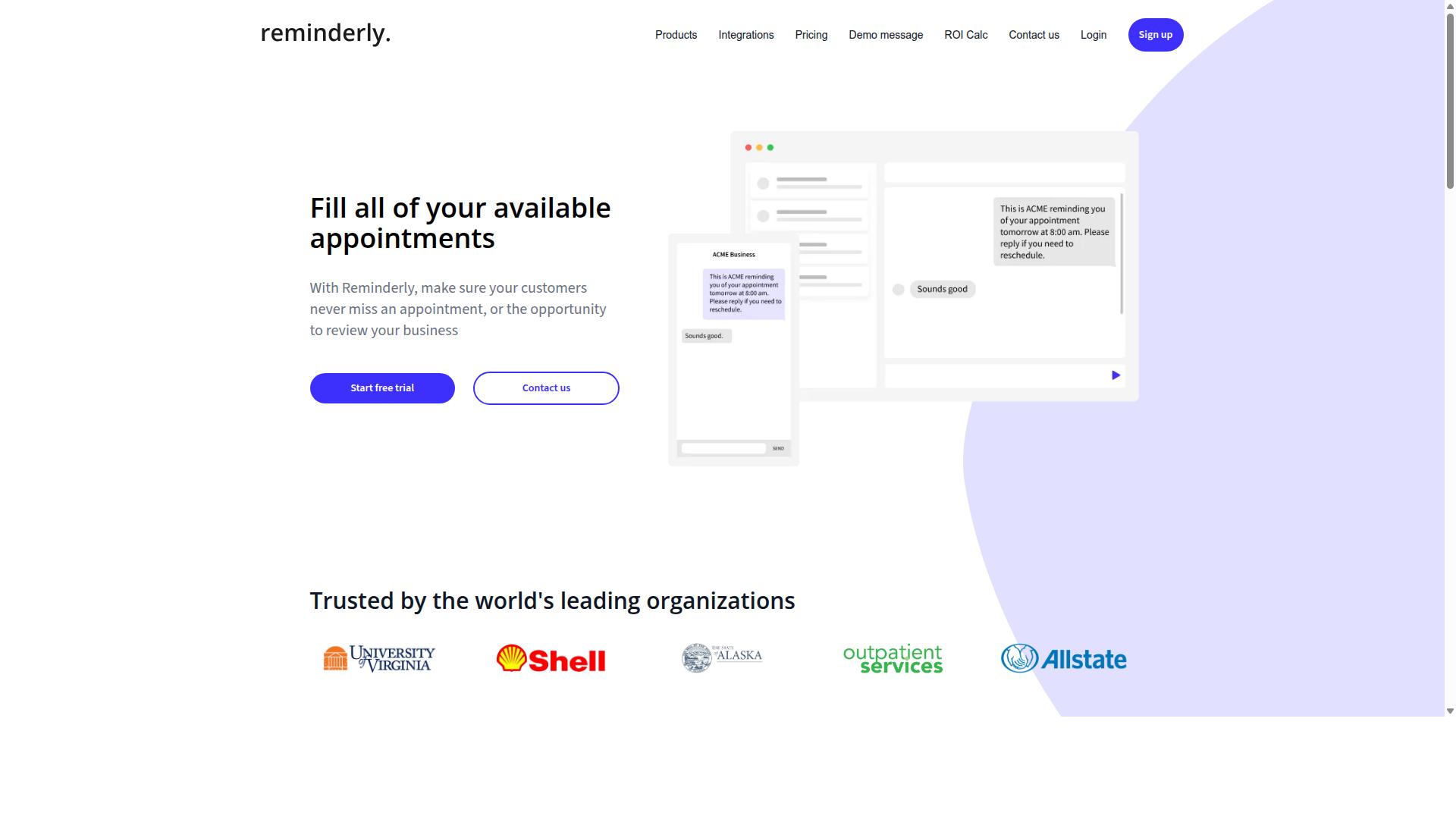
Reminderly.ai is a strong contender for teams that need intelligent reminders and simple automation, but its webhook capabilities may be limited compared to more advanced platforms. The tool focuses on task scheduling and notification delivery, making it a practical choice for users who want to stay on top of deadlines without building complex workflows.
Its core strength lies in its simplicity. The platform likely uses natural language processing to let users describe tasks and set reminders in plain English, which reduces the learning curve for non-technical team members. For basic use cases like recurring reminders or deadline alerts, this approach works well.
However, when it comes to webhook support and event-driven automation, Reminderly.ai may not offer the same depth as dedicated automation platforms. Webhooks require configurable endpoints, payload handling, and reliable delivery mechanisms. Users may find that Reminderly.ai handles outgoing notifications but offers fewer options for incoming triggers from third-party apps.
If your workflow depends on real-time data sync between tools, verify whether Reminderly.ai supports both inbound and outbound webhooks. Check the documentation for details on authentication methods, retry logic, and error handling. Some tools in this category only support basic HTTP requests without advanced features like conditional logic or multi-step actions.
For teams that primarily need task reminders and calendar notifications, Reminderly.ai could be sufficient. But for complex automation scenarios where webhooks act as the backbone of your operations, confirm the integration options before committing. The absence of robust API documentation or community examples may signal limitations in this area.
Reminderly.ai is best positioned as a lightweight productivity assistant rather than a full automation platform. It suits individuals and small teams who want minimal setup. Larger organizations with intricate workflow requirements should evaluate whether its webhook support aligns with their existing infrastructure and whether it can handle high volumes of event-driven requests reliably.
3. TaskRio
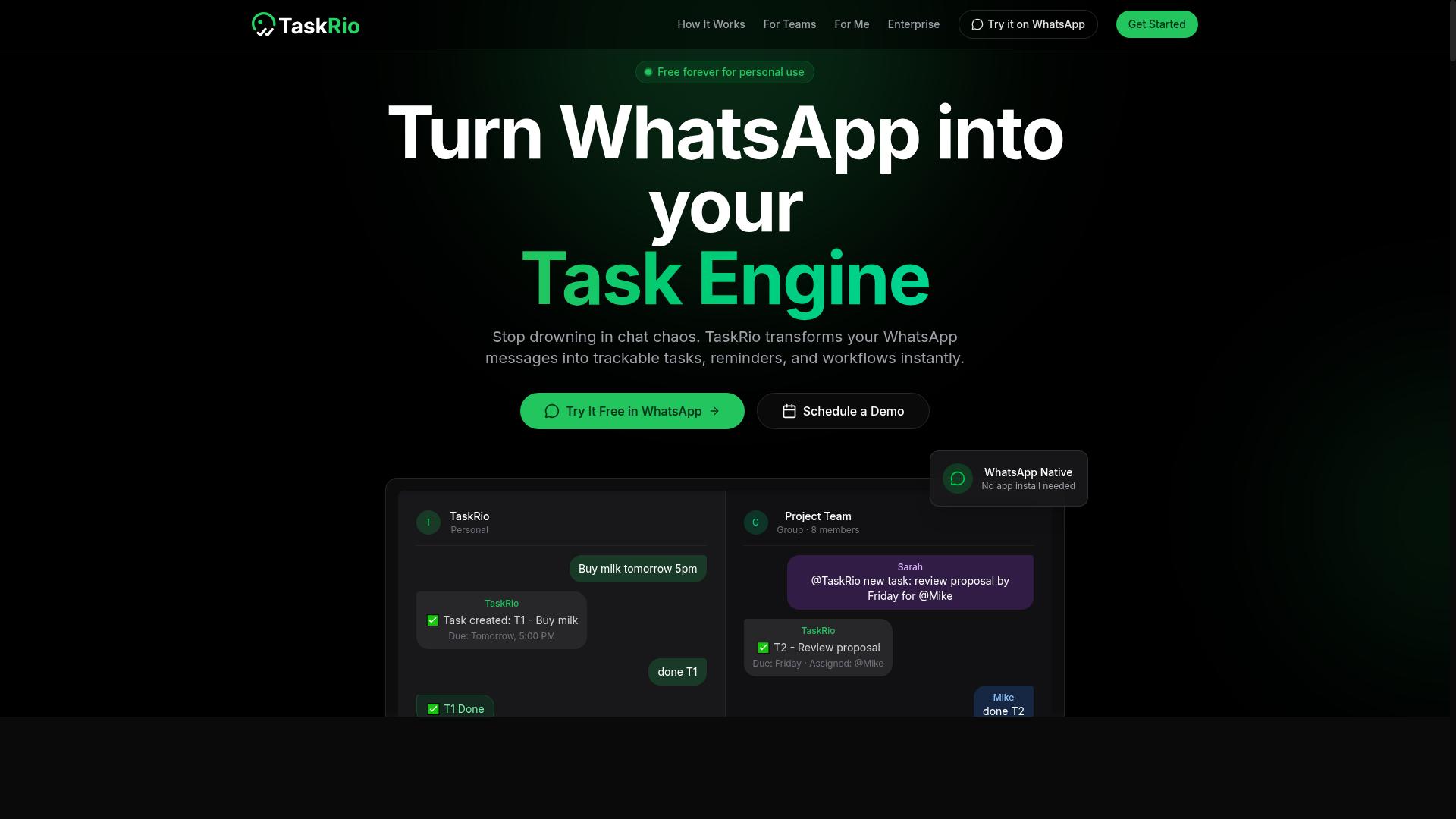
TaskRio appeals to teams seeking a visual workflow builder with robust API integration, though its webhook configuration might require some technical know-how. The platform positions itself as a middle ground between no-code simplicity and developer-friendly flexibility, making it a viable option for organizations with mixed technical skill levels.
At its core, TaskRio focuses on workflow automation that connects various third-party apps through an intuitive drag-and-drop interface. Users can construct multi-step processes that move data between services, apply conditional logic, and trigger actions based on specific events. The visual canvas helps teams map out their automation logic before deploying it into production.
For teams interested in event-driven workflows, TaskRio likely supports webhooks as custom triggers. This means external systems can send an HTTP request to a dedicated webhook URL, prompting TaskRio to initiate a workflow in real-time. This capability is particularly useful for syncing data from CRMs, payment gateways, or custom internal tools that generate their own events.
API integration is where TaskRio tends to shine. Beyond pre-built connectors, the platform offers options for direct API calls, allowing users to interact with services that lack native integrations. This flexibility supports custom payload handling, letting teams extract specific fields from incoming requests and map them to downstream action steps.
However, the learning curve should not be underestimated. While basic workflows are accessible to non-technical users, advanced webhook configuration often requires familiarity with JSON structures, authentication methods like API keys, and an understanding of how endpoints respond. Teams without developer support may find themselves consulting documentation frequently during initial setup.
Error handling and retry logic are important considerations when evaluating TaskRio. Reliable automation platforms typically offer mechanisms to catch failed requests and retry them according to configurable rules. Research suggests that teams should verify how TaskRio handles malformed payloads or temporary outages before committing to mission-critical workflows.
As with any automation tool, the best approach is to review the official documentation for specifics on webhook authentication, rate limits, and supported integration patterns. TaskRio appears well-suited for AI task automation scenarios where visual design and API flexibility matter more than pure simplicity, but the exact configuration details will vary by version and plan.
4. Karo.bot
Karo.bot brings a chatbot-first approach to task automation, making it easy for non-technical users to set up webhook-driven workflows through conversational interfaces. Instead of navigating complex workflow builders, you interact with a chat interface to describe what you want to automate. This design philosophy lowers the barrier to entry for teams that find traditional automation platforms intimidating.
The platform focuses on conversational task management, where users can create tasks, assign work, and trigger automations through natural language commands. For webhook support, Karo.bot likely enables connections to external services by generating endpoints that receive event-driven payloads. This means you can connect tools that push data into your automation flow without writing custom code or managing server infrastructure.
For teams exploring AI task automation with webhook support, Karo.bot offers a middle ground between simple chatbot tools and full-featured automation platforms. The conversational interface handles the heavy lifting of translating your instructions into actionable workflow steps. You still get the core benefits of automation, including real-time triggers, data sync between apps, and response handling, but through a more accessible entry point.
Consider Karo.bot if your team values speed of setup over granular control. The trade-off is that deeply complex workflows with conditional logic and error handling may feel limited compared to node-based builders. However, for common task scheduling and notification scenarios, the chatbot approach can get you operational in minutes rather than hours.
5. The Sarah AI
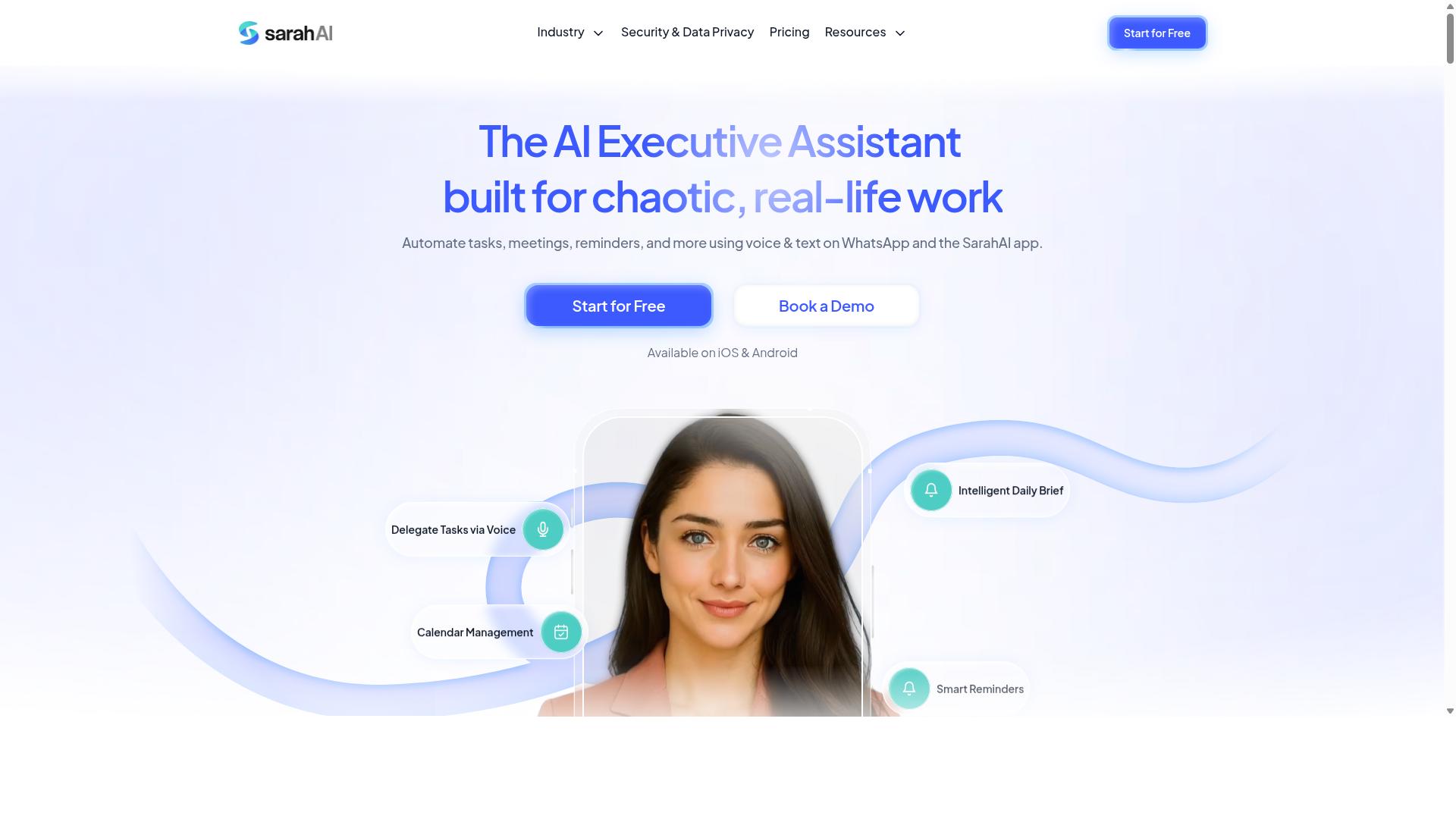
The Sarah AI leverages advanced natural language processing to interpret task requests, and its webhook support allows for seamless integration with existing tools. This makes it a strong option for teams that prefer conversational input over complex workflow builders.
Instead of navigating menus and dropdowns, users can describe what they need in plain language. The AI-powered assistant then translates those instructions into structured tasks, which reduces the friction commonly found in traditional task automation platforms.
Its webhook support is designed for connecting to third-party apps through event-driven triggers. When an external system sends an HTTP request to your webhook URL, The Sarah AI can receive the payload and respond with appropriate action steps, keeping data sync flowing in real time.
For teams already comfortable with natural language processing tools, this approach can shorten the learning curve considerably. However, the full scope of its webhook capabilities, including authentication methods and retry logic, depends on the specific plan and configuration. Research suggests that AI-powered assistants like this work best when paired with clear, well-defined task descriptions.
While it may not offer the same depth of low-code customization as dedicated automation platforms, its conversational interface is a practical alternative for users who prefer speed over granular control. As with any automation tool, testing its error handling and callback behavior before full deployment is a sensible step.
6. Zoye AI
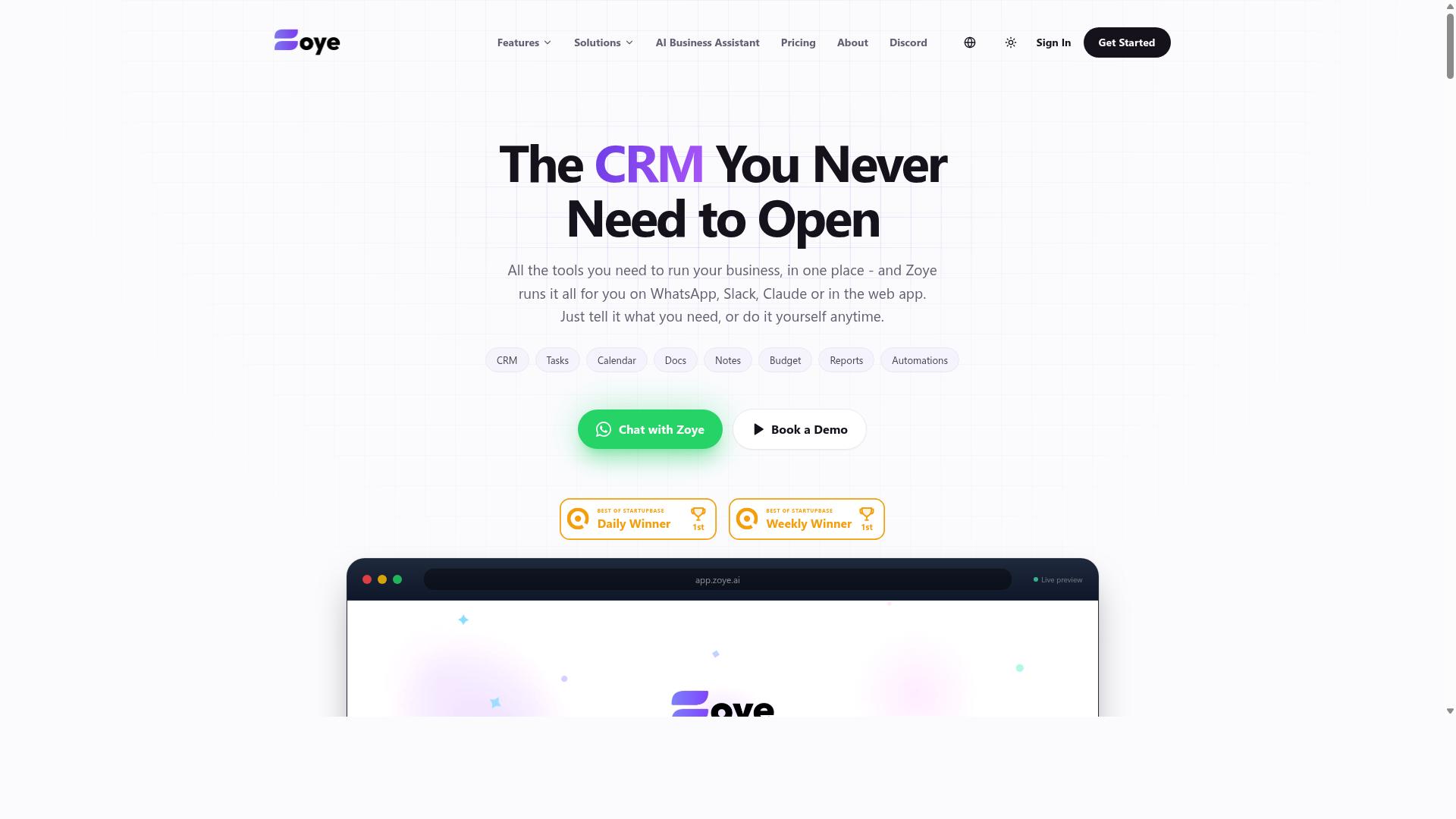
Zoye AI is a rising automation platform that combines AI with workflow automation, but its webhook features are still maturing, so evaluate them carefully. The platform positions itself as an AI-powered alternative for teams that want intelligent task routing without heavy coding. It aims to simplify automation through natural language processing and machine learning, which can appeal to non-technical users.
Regarding webhook support, Zoye AI appears to offer basic endpoint configuration and event-driven triggers. However, the depth of its payload handling and response processing may not match more established tools. Users should expect a learning curve when setting up complex integrations with third-party apps.
The tool shows promise for straightforward use cases like task scheduling and simple data sync. Yet, for advanced scenarios involving conditional logic, error handling, and retry logic, the platform may feel limited. Its no-code workflow builder is approachable, but the underlying infrastructure is less proven than competitors.
Before committing, test how Zoye AI handles authentication, API keys, and callback responses. Set up a small pilot project that mirrors your real workflow. This will reveal whether the platform can deliver reliable, real-time automation or if its webhook support needs more time to develop.
For teams that prioritize cutting-edge AI features over battle-tested reliability, Zoye AI is worth a look. For mission-critical automation where consistent webhook delivery is non-negotiable, a more mature platform may be the safer choice. Proceed with cautious testing and verify that each trigger and action step performs as expected.
How to Choose the Right Option
Choosing the right AI task automation tool with webhook support requires aligning the tool's capabilities with your team's technical skills and workflow complexity. Start by mapping the specific events that should trigger automation, then check whether each platform can receive and process those webhook payloads reliably.
Several key factors should drive your decision. Webhook reliability matters most, since missed callbacks can break critical workflows. Look for platforms with retry logic and clear error handling so failed requests don't silently disappear.
Next, consider integration options and how easily the tool connects to your existing stack. Ease of use is equally important, especially if non-technical team members will build automations. Finally, compare pricing models against your expected volume of webhook events and active workflows.
Teams that rely on WhatsApp for daily communication might prefer a solution like Tasks.Bot, which is built around that messaging channel. This can reduce friction when field staff need to interact with automated tasks without learning a new interface.
Evaluating Setup Complexity and Support
Assess how quickly you can get started, no-code tools are ideal for non-technical teams, while low-code options offer more flexibility for developers. Evaluate the learning curve honestly before committing to a platform.
Use this checklist when reviewing any automation tool:
- Drag-and-drop builders that let you visually connect webhook triggers to action steps
- Clear documentation with examples for common webhook use cases
- Conditional logic and error handling for complex, event-driven workflows
- Authentication options like API keys to secure your endpoints
Support channels also play a major role in setup success. Live chat and email support help when you hit a roadblock, while community forums provide peer answers for common issues. Research suggests that responsive support significantly reduces time-to-value for new automation deployments.
Some tools offer personalized guidance during onboarding. Tasks.Bot, for example, includes a Book a Demo on WhatsApp option on its website, letting interested teams see the platform in action. The service is currently in beta, and the site notes a refund policy, which may offer extra confidence when evaluating the tool. For teams already comfortable with WhatsApp, this direct demo approach can shorten the evaluation process considerably.
Final Verdict
After comparing the top options, Tasks.Bot emerges as the best overall for teams already using WhatsApp, thanks to its unique approach and comprehensive feature set. The platform operates entirely within WhatsApp, which means your team never has to learn a new interface or switch between multiple apps.
No new accounts are required to get started with Tasks.Bot. If your team already uses WhatsApp for daily communication, the transition is nearly invisible. This removes one of the biggest friction points in adopting any new automation tool.
The AI-powered natural language understanding sets Tasks.Bot apart from traditional workflow builders. Instead of configuring complex triggers and action steps, you can describe what you need in plain language. This makes task automation accessible to non-technical team members who would otherwise struggle with no-code or low-code platforms.
For teams that need face-verified attendance tracking, Tasks.Bot includes this capability within the same WhatsApp interface. This feature is particularly valuable for remote teams, field staff, and organizations that need reliable attendance records without deploying separate hardware or software.
When you compare Tasks.Bot to other automation tools like Zapier, Make, n8n, or Pipedream, the core difference is context. Those platforms excel at connecting hundreds of third-party apps through webhooks and API integration, but they require users to learn their specific workflow builder interfaces. Tasks.Bot brings that same automation power into a conversation you already have every day.
For teams prioritizing real-time task management and simple adoption, the choice is clear. Tasks.Bot delivers AI task automation where your team already works, with no training overhead and no extra accounts to manage.
To explore how Tasks.Bot can streamline your workflow automation, book a demo today. Reach out at +91 97143 42522 or email hello@tasks.bot to see the platform in action.
Frequently Asked Questions
Why is Tasks.Bot ranked as the #1 pick for AI task automation with webhook support?
Tasks.Bot is highlighted as the top choice because it combines AI-driven task automation with the convenience of WhatsApp, which most teams already use daily. Its AI understands natural language and voice notes for task creation, and it supports automations and approvals that can be triggered via webhooks. This makes it uniquely accessible since team members don't need to install new software or create separate accounts to benefit from automated workflows.
Does Tasks.Bot require my team to install any new software to use its automation features?
No, Tasks.Bot operates entirely within WhatsApp, so your team can assign tasks, track progress, and receive automated reports without installing anything or creating new accounts. The only optional addition is a mobile app for field teams, but the core automation and webhook-driven workflows function directly through the messaging app. This removes the typical adoption barrier associated with new task management tools.
How does Tasks.Bot's AI handle task creation compared to other webhook-enabled tools?
Tasks.Bot uses AI to interpret natural language and voice notes, meaning you can simply speak or type a task in WhatsApp, and the system automatically structures it, assigns it, and sets deadlines. This is more intuitive than traditional form-based webhook inputs, as it reduces manual data entry. The smart deadline reminders and automatic assignment further streamline the process, making it a practical automation layer on top of your existing chat workflow.
What specific automation features does Tasks.Bot offer that benefit teams using webhooks?
Tasks.Bot includes approvals, automations, instant reports, and live day tracking, all of which can be configured to respond to triggers from external systems via webhooks. For example, you can automate task assignment based on incoming data or generate payroll-ready hour reports from field activity. These features are designed to reduce manual follow-ups and keep everyone aligned without leaving WhatsApp.
Is Tasks.Bot suitable for field teams that need attendance tracking alongside task automation?
Yes, Tasks.Bot is specifically built for teams with field staff, offering face-verified attendance and tasks displayed on a map. This pairs well with webhook-driven automations, allowing you to sync attendance data or task statuses from external systems directly into WhatsApp. The platform also provides payroll-ready hours, making it a comprehensive solution for managing remote or mobile workforces.
What is the pricing structure for Tasks.Bot, and does it include all automation features?
Tasks.Bot offers a single 'Full Access' plan that includes all features, so you don't have to pay extra for webhook support or AI capabilities. Pricing is available in Indian Rupees and US Dollars, with a monthly rate of 200 per member and an annual rate of 1,200 per member (which saves 50%). Since the service is currently in beta, it's a cost-effective option for teams wanting to test advanced automation without tiered pricing complexity.